-
Treat Water as an Essential Strategic Resource in the Middle East
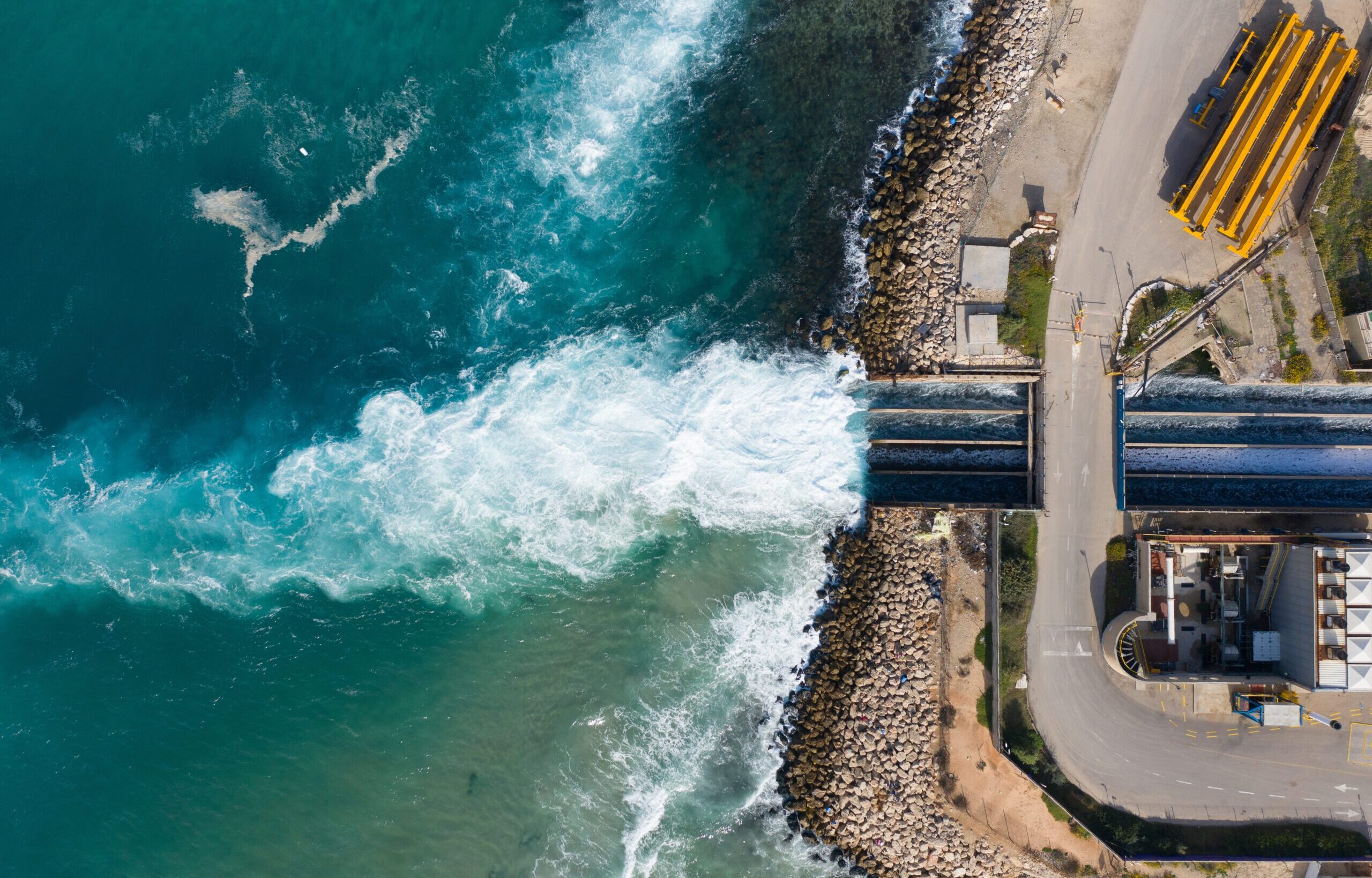
De-risking energy is a key element of geopolitical focus in our moment. This is especially true now, as energy security, diversifying supply routes, protecting shipping lanes, and insulating economies from disruption in the Strait of Hormuz are clear priorities.
Yet perhaps water deserves the same sort of concentrated attention. The Gulf’s water systems may be even more strategically vulnerable, while receiving only a fraction of the focus given to energy.
If energy security is central to economic stability in the Gulf, water security underpins state resilience itself.
This means safeguarding water infrastructure; investing in decentralized, climate-resilient systems with built-in redundancy and storage; and strengthening governance through transparent allocation systems, clear rules and credible dispute-resolution mechanisms.A Dangerous Dependence
Water is not simply an environmental or development issue. It is increasingly tied to economic stability, public health, food security and broader societal resilience. Acknowledging weak points and challenges is essential to preserving water security.
A significant concentration of water supply is one key issue. Across the Gulf, states depend on a small number of coastal desalination plants that supply the overwhelming majority of drinking water. In Qatar, more than 99% of potable water comes from desalination. This figure reaches roughly 90% in Kuwait and 86% in Oman. Iran faces comparable challenges: agriculture accounts for roughly 70–80% of national water consumption, despite the country’s continued reliance on food imports.
Reliance on desalination has created one of the most centralized water systems in the world: heavily concentrated, energy-intensive, and acutely vulnerable to disruption at a limited number of exposed facilities.
Other factors across the region underscore the dangers of concentration. Extreme heat places mounting strain on power grids, water systems and public services. Groundwater reserves accumulated over millennia are being depleted within decades, while floods, cyclones and other climate-related shocks become more frequent and severe.
Beyond the Water Wars Narrative
Deeper risks can be found not only in water scarcity and centralized infrastructure. The systems that manage, distribute and sustain water supplies during periods of conflict and political instability are also highly fragile.
In Iraq, declining water availability has interacted with existing fragilities to contribute to localized unrest, displacement, and pressure on vulnerable communities. Years of conflict and institutional breakdown have left water systems in Yemen largely unregulated, and control over wells and infrastructure by local actors has led to overuse, unequal access and occasional violence. One resident in that country’s Sirar district offered a powerful assessment: water had turned “from a source of life to a cause of death.”
Yet reducing these risks requires not only stronger infrastructure, but also stronger institutions that can function during periods of crisis or in post-conflict recovery.
In Syria, for instance, a recent assessment of the Government’s Statement of Recovery Priorities showed that simply restoring large-scale irrigation systems to pre-war levels was insufficient. Without adjusting water allocation, this course of action would risk the collapse of Syria’s already depleted aquifers.
Mutual Vulnerability
Challenges to water security already are shaping regional security dynamics. During periods of heightened regional escalation in the current conflict, Iran has largely refrained from directly targeting Gulf desalination facilities, even as its leaders have repeated threats around wider energy infrastructure and shipping.
Yet Iranian officials also have signaled that attacks on Gulf water infrastructure could occur, especially in the event of large-scale attacks on its own critical infrastructure. Kuwait reported drone attacks it attributed to Iran had damaged two power and water desalination plants in April, although Iran did not publicly acknowledge responsibility.
In effect, a form of mutual vulnerability has emerged around desalination infrastructure. The consequences of directly targeting these systems would likely be catastrophic not only for the states attacked, but for regional stability more broadly.
Given their essential role in civilian survival and social stability, it seems a prudent choice to avoid such attacks. At a minimum, parties to conflict should avoid targeting any civilian infrastructure, including water systems.
How to De-Risk Water Systems
In the Gulf context, de-risking water systems essentially means reducing dependence on a small number of highly exposed desalination plants, as well as building greater redundancy into water systems overall. Expanding emergency storage capacity, strengthening backup power systems, diversifying supply sources, and ensuring alternative options exist if critical infrastructure is damaged are essential parts of this task.
Yet a true “de-risking” requires more: investing in more decentralized and climate-resilient systems that are less vulnerable to single points of failure during crises or conflict.
Desalination plants across the Gulf rely on constant electricity supplies. Power outages can quickly disrupt access to water. Building resilience therefore requires closer coordination between water, energy and emergency planning.
As we have noted, infrastructure alone is not enough. Water policy must be more closely integrated with decisions on energy, agriculture and urban planning, especially in highly connected Gulf systems in which pressure in one sector can quickly spill into another.
Governments must also create and sustain the institutions needed to manage water fairly and effectively via transparent allocation systems, clear rules and credible mechanisms to resolve disputes. Information is also essential. Better monitoring and documentation of impacts on water systems supports emergency responses and overall strengthening. The Conflict and Environment Observatory is one example of an organization which has played an important role in documenting the environmental dimensions of conflict.
Finally, resilience also increasingly depends on broader regional coordination, including emergency water-sharing arrangements, contingency planning, and information-sharing around infrastructure vulnerabilities and reserve capacity. Foundations for this activity already exist. Gulf states have previously worked together on oil spill response and maritime environmental risks through regional mechanisms such as ROPME following the 1991 Gulf War.
From UN water discussions to climate negotiations under the next COP presidency, there are numerous opportunities to raise the profile of water within wider security and resilience agendas. But doing so will require moving beyond rhetorical commitments to ensure that policies are grounded in local realities and backed by adequate resources.
In a fragmented geopolitical environment, such forms of practical cooperation are becoming increasingly valuable. Water should not be treated as a secondary issue overshadowed by energy or defense. It is now central to both.
That the Gulf’s desalination systems have become too dangerous to attack directly is anything but reassuring. Rather, it is a warning about just how vulnerable water security in the region has become.
Nazanine Moshiri is a Senior Climate & Peace Advisor at the Berghof Foundation. She is a former journalist and senior climate analyst for International Crisis Group, and has served as a UN expert on Somalia.
Dr. Beatrice Mosello is a Senior Research Fellow at Chatham House specializing in water security, climate resilience and environmental governance.
Sources: Al Jazeera English; Arab Gulf States Institute; Berghof Foundation; Carnegie Endowment for Peace; Chatham House; Conflict and Environment Observatory; Euronews; The Guardian; ODI Global; United Nations
Photo Credits: Licensed by Adobe Stock
 A Publication of the Stimson Center.